Amateur vs Professional Metal Fabrication: How to Spot the Difference
When it comes to metal fabrication, the difference between amateur and professional workmanship can mean the difference between a structure that lasts decades and one that fails prematurely. Many people don’t realise that poor welding or fabrication often looks acceptable at first glance — until cracks, corrosion, or safety issues begin to appear.
Understanding professional welding vs amateur fabrication helps homeowners, builders, and businesses make informed decisions before committing time and money to a project. Below, we explain exactly how to tell good welding, what separates quality work from shortcuts, and why quality metal fabrication always pays off in the long run.
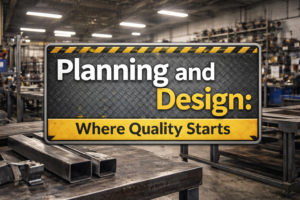
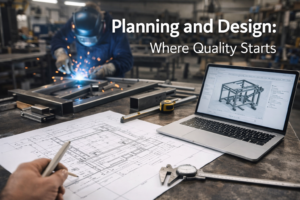
1. Planning and Design: Where Quality Starts
One of the biggest differences between amateur and professional metal fabrication happens before welding even begins.
Amateur fabricators often rush straight into cutting and welding with minimal planning. Measurements may be guessed, materials chosen incorrectly, and tolerances ignored. This leads to misaligned components, uneven joins, and weak structures.
Professional fabricators start with:
-
Accurate measurements
-
Clear drawings or plans
-
Material selection suited to the environment and load
-
Compliance with Australian standards
This planning stage ensures every weld, cut, and joint has purpose — a key foundation of quality metal fabrication.
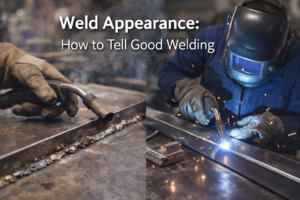
2. Weld Appearance: How to Tell Good Welding
A common question is how to tell good welding just by looking at it.
Signs of amateur welding:
-
Uneven or inconsistent weld beads
-
Excessive spatter
-
Burn-through or undercutting
-
Porosity (tiny holes in the weld)
-
Rough, unclean finishes
Signs of professional welding:
-
Smooth, consistent weld beads
-
Proper penetration into the base metal
-
Clean edges with minimal spatter
-
Even heat distribution
-
Welds that look uniform across the entire project
While appearance isn’t everything, experienced professionals know that good-looking welds usually indicate correct technique, settings, and preparation.
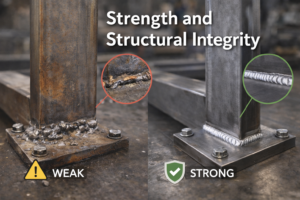
3. Strength and Structural Integrity
The most important difference in professional welding vs amateur work is structural strength.
Amateur welds may hold initially but often fail under:
-
Load
-
Vibration
-
Temperature changes
-
Environmental exposure
Professional metal fabrication ensures:
-
Correct weld penetration
-
Suitable welding processes (MIG, TIG, Stick)
-
Structural reinforcement where required
-
Compliance with load-bearing requirements
This is especially critical for structural steel, frames, supports, and commercial applications where safety is non-negotiable.
4. Material Knowledge and Selection
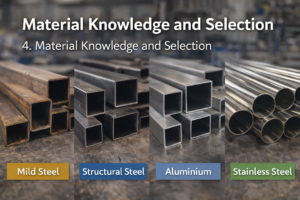
Not all metals behave the same when welded.
Amateur fabricators may:
-
Use the wrong filler material
-
Apply incorrect heat settings
-
Ignore expansion and contraction
-
Mix incompatible metals
Professional fabricators understand how to work with:
-
Mild steel
-
Structural steel
-
Aluminium
-
Stainless steel
Correct material handling ensures durability, corrosion resistance, and long-term performance — all hallmarks of quality metal fabrication.
5. Precision and Fitment
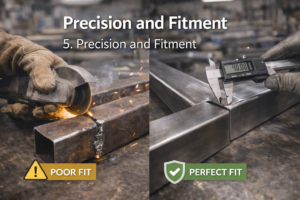
Another way to tell the difference between amateur and professional fabrication is fitment.
Amateur work often relies on grinding or forcing parts to fit after welding. This weakens the structure and compromises alignment.
Professional metal fabrication delivers:
-
Tight tolerances
-
Square and level assemblies
-
Clean joins
-
Accurate fit the first time
Precision reduces stress points, improves aesthetics, and ensures components function exactly as intended.
6. Safety, Compliance, and Standards
Professional fabricators work to Australian standards and industry best practices. This includes:
-
Safe welding procedures
-
Correct PPE usage
-
Structural compliance
-
Load testing where required
Amateur fabrication may overlook these requirements entirely, increasing the risk of injury, failure, or legal issues — especially on commercial or industrial projects.
7. Long-Term Value vs Short-Term Savings
Choosing amateur fabrication often seems cheaper upfront, but it frequently leads to:
-
Rework
-
Repairs
-
Premature failure
-
Safety concerns
Professional fabrication may cost slightly more initially, but it delivers:
-
Longer lifespan
-
Reduced maintenance
-
Better performance
-
Peace of mind
In almost every case, quality metal fabrication saves money over time.
Why Choosing a Professional Fabricator Matters
Knowing how to tell good welding and understanding the difference between amateur and professional fabrication empowers you to make smarter decisions.
Whether the project is residential, commercial, or industrial, professional metal fabrication ensures:
-
Accuracy
-
Strength
-
Durability
-
Compliance
-
Reliable results
When workmanship matters — and it always does — choosing experienced professionals ensures your project is built to last.
Need Professional Metal Fabrication in Perth?
If you’re looking for quality metal fabrication, experienced welding, and reliable workmanship, working with professionals ensures the job is done right the first time.
