MIG vs TIG Welding: What’s the Difference and Which Is Best?
MIG vs TIG Welding: What’s the Difference and Which Is Best?
Mig Vs Tig
Mig Vs Tig Welding
When it comes to professional metal fabrication, choosing the right welding process can have a major impact on the strength, appearance, and longevity o
f a finished product. Two of the most commonly used welding methods are MIG welding and TIG welding.
Many people ask, “What is the difference between MIG and TIG welding?” or “Which welding process is best?” The answer depends on the material, application, and project requirements.
What Is MIG Welding?
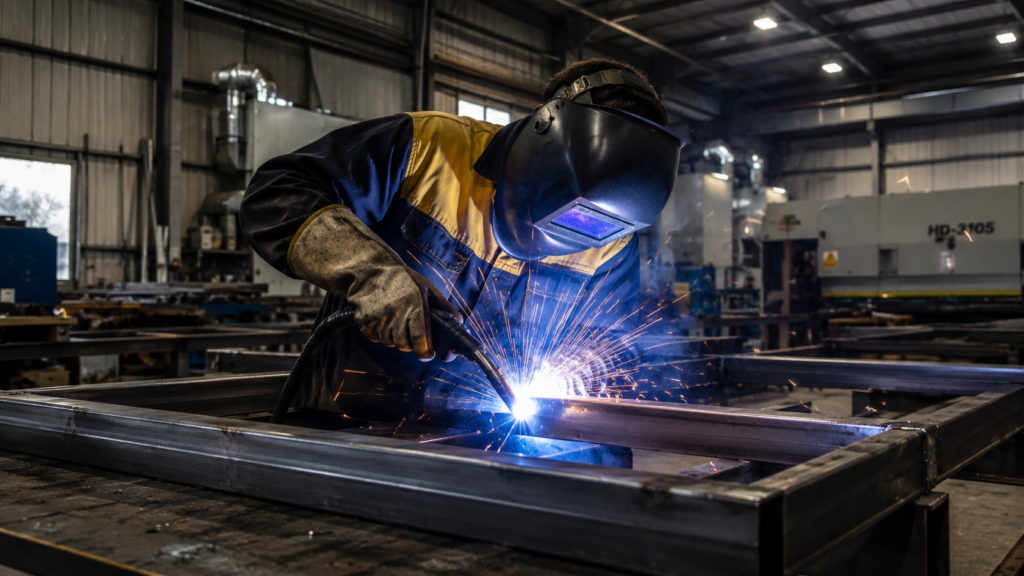
MIG (Metal Inert Gas) welding uses a continuously fed wire electrode and shielding gas to create the weld.
MIG welding is popular because it is:
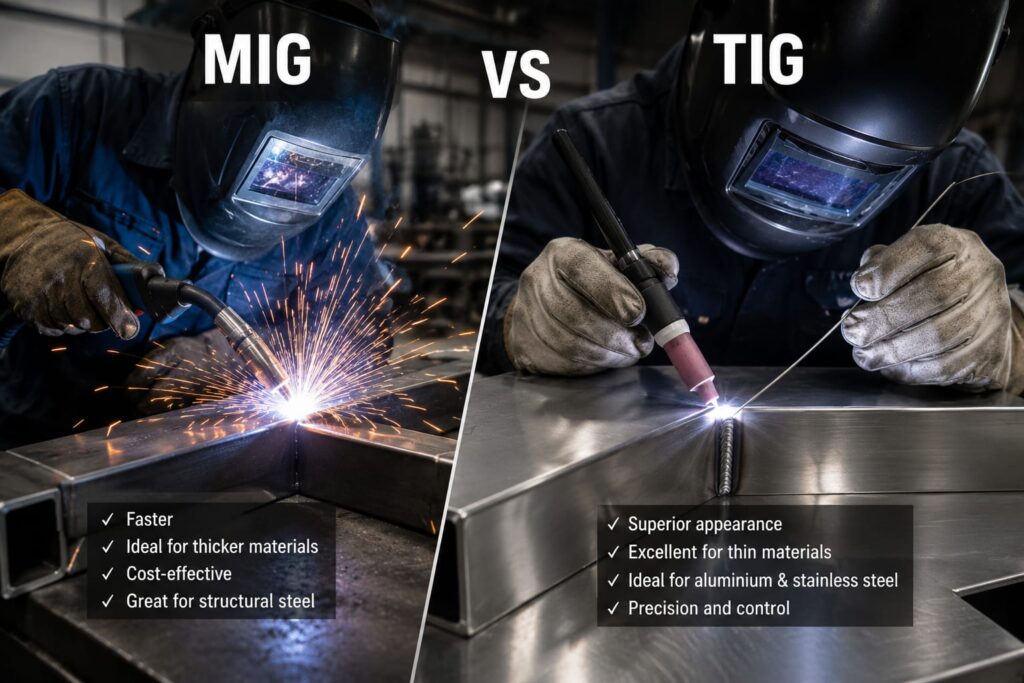
Fast and efficient
Easy to learn and operate
Suitable for thicker materials
Cost-effective for production work
Excellent for structural steel fabrication
Because the wire continuously feeds through the welding gun, fabricators can complete large projects quickly while maintaining strong welds.
MIG welding is commonly used in:
Structural steel fabrication
Commercial construction
Heavy equipment repairs
Mining applications
General fabrication projects
Mig Welding
What Is TIG Welding?
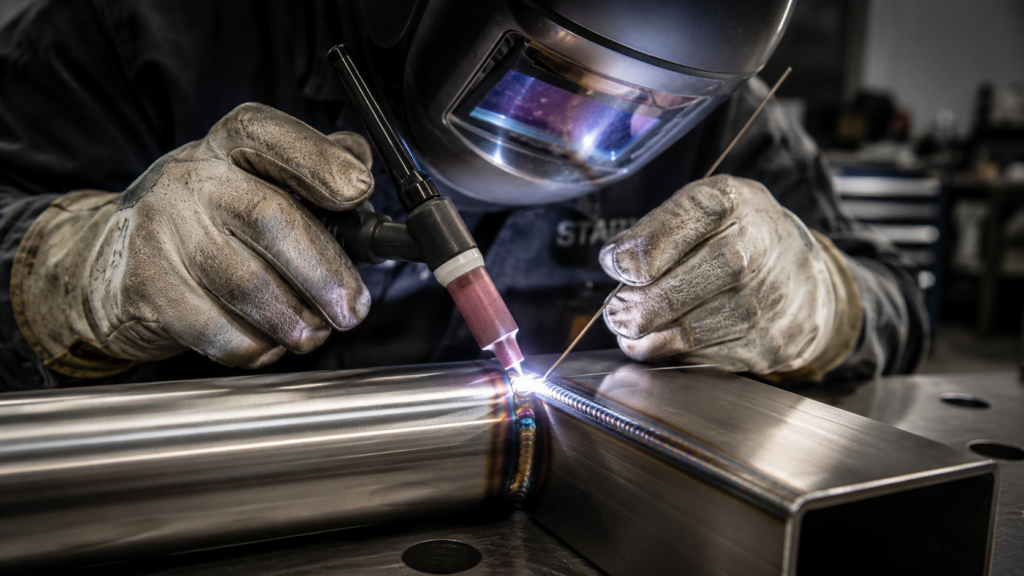
TIG (Tungsten Inert Gas) welding uses a non-consumable tungsten electrode to create the weld while filler material is added separately if required.
TIG welding offers:
Exceptional precision
Clean and attractive weld appearance
Superior control over heat input
Excellent results on thin materials
High-quality aluminium and stainless steel fabrication
Because the process is slower and requires greater skill, TIG welding is often chosen when appearance and precision are priorities.
Common TIG welding applications include:
Stainless steel fabrication
Aluminium fabrication
Architectural metalwork
Food-grade equipment
Custom fabrication projects
Tig Welding
MIG vs TIG Welding: Key Differences
Speed
MIG welding is significantly faster than TIG welding. This makes it ideal for large-scale fabrication and production work.
Appearance
TIG welding generally produces cleaner and more visually appealing welds with minimal spatter.
Strength
Both welding methods can create extremely strong welds when performed correctly. The strength depends more on weld quality and application than the welding process itself.
Cost
MIG welding is typically more economical due to faster production times and lower labour costs.
Precision
TIG welding provides greater control, making it ideal for detailed fabrication work and thinner materials.
Which Welding Process Is Best?
There is no single “best” welding method for every project.
Choose MIG Welding When:
Speed and efficiency are important
Working with thicker steel materials
Producing large fabrication runs
Structural strength is the primary focus
Choose TIG Welding When:
Appearance matters
Working with aluminium or stainless steel
Fabricating thin materials
Precision and detail are required
Professional Welding Solutions in Perth
At CSM Fabrication & Welding, we use both MIG and TIG welding depending on the project’s specific requirements. Our team assesses material type, structural requirements, finish quality, and budget to determine the most effective welding solution.
Whether you require structural steel fabrication, aluminium welding, stainless steel fabrication, or custom metalwork, we deliver high-quality workmanship built to last.
Contact CSM Fabrication & Welding
If you’re unsure whether MIG or TIG welding is right for your project, contact CSM Fabrication & Welding today. Our experienced team can recommend the best fabrication and welding solution for your application.